The book of the deck
The GrimoireRead the book
Contents
- Greetings, Courageous Soul
- The Lineage of Memory
- The Cards as a Mirror
- Inspiration
- Campbell's Monomyth
- The Heroine's Journey — Maureen Murdock
- The Heroine with 1,001 Faces
- Lights on My Path
- How to Read the Cards
- Symbolic Lexicon
- No. 1 · Abundance
- No. 2 · Adventure
- No. 3 · Alchemist
- No. 4 · Amulet
- No. 5 · Balance
- No. 6 · Beast
- No. 7 · Bee
- No. 8 · Belly of the Whale
- No. 9 · Blooming
- No. 10 · Bluebeard
- No. 11 · Bride
- No. 12 · Bridge
- No. 13 · Cage
- No. 14 · Contemplation
- No. 15 · Contrast
- No. 16 · Creation
- No. 17 · Crone
- No. 18 · Crossroads
- No. 19 · Death
- No. 20 · Desert
- No. 21 · Door
- No. 22 · Dreams
- No. 23 · Elixir
- No. 24 · Eros
- No. 25 · Fate
- No. 26 · Forest
- No. 27 · Gnosis
- No. 28 · Grail
- No. 29 · Guardian
- No. 30 · Heritage
- No. 31 · Heroine
- No. 32 · Illusion
- No. 33 · Inner Child
- No. 34 · Innocence
- No. 35 · Key
- No. 36 · King
- No. 37 · Knight
- No. 38 · Labyrinth
- No. 39 · Mage
- No. 40 · Mask
- No. 41 · Mirror
- No. 42 · Mother
- No. 43 · Obstacle
- No. 44 · Perspective
- No. 45 · Poison
- No. 46 · Prince
- No. 47 · Queen
- No. 48 · Resurrection
- No. 49 · Roots
- No. 50 · Sacrifice
- No. 51 · Safe Place
- No. 52 · Shadow
- No. 53 · Source
- No. 54 · Spiral
- No. 55 · Sword
- No. 56 · Synchronicity
- No. 57 · Temptation
- No. 58 · Transcendence
- No. 59 · Transformation
- No. 60 · Trauma
- No. 61 · Treasure
- No. 62 · Tree of Life
- No. 63 · Trickster
- No. 64 · Union
- No. 65 · Vision
- No. 66 · Wanderer
- No. 67 · Warrior
- No. 68 · Weaving
- No. 69 · Wisdom
- No. 70 · Womb
- Origins and Copyright
- Further reading
- About the author · Tisa Milić
Greetings, Courageous Soul
Before you is the guidebook to the Lineage of the Dragoness deck, which comprises seventy archetypal cards. Each card in the deck has a corresponding entry in this guidebook. The deck follows the monomythic structure of the hero’s journey through a feminine lens and invites you to dive into the depths of the self. May this adventure give you tools for transformation and deep insight into the very essence of your feminine nature, and may the dragoness sleeping within you awaken!
The Lineage of Memory
This deck was created to serve as a map of the ancient path of feminine initiation, which spans maidenhood, motherhood, rebirth and the wisdom of old age. Each card carries one part of that path, and the seventy terms of the cards are grouped into four kinds: symbols, figures, stages of the journey and concepts. In them the many faces of the female psyche are reflected, woven into timeless mythic themes.
The Serbian word loza has several meanings. It is the grapevine, the stem that leads from root to cluster, but also the lineage, the line of descendants stretching from the first mothers to their youngest daughters. In Serbia lozovača, a brandy made from grapes, distilled once a year and kept for feast days, weddings and farewells, is called loza too. All three meanings speak of the same thing: of fruit that ripens with time and of the patience and strength handed down from generation to generation. Indeed, the vine itself bears fruit only after three years have passed since planting.
There is also a fourth, more hidden reading of loza. In Genesis the first fruit humanity reaches for is the fruit of knowledge, and the serpent leads us to it. The Gnostics of the first centuries read this story differently from later tradition: for them the serpent was a teacher of wisdom, and Eve the first to awaken from the sleep of unconsciousness. Such a reading does not reject the divine; it seeks God beyond fear and prohibition, in a knowledge that is recognised and awakened from within rather than received from outside as ready-made dogma. This living, transforming knowledge the Gnostics called gnosis.
For centuries the search for the inner light smouldered at the edges of law and taboo, of the expected, even of the possible and the probable. True knowledge of the world, of nature and of the human soul often had to cross the threshold of the forbidden in order to survive and become a gift to the whole community.
Maria Tatar reminds us that ever since Eve and Pandora our culture has cast women’s curiosity as sin and transgression, a dark craving for the forbidden. She shows, however, that this curiosity was most often an expression of care and attention towards others, and that the true sin is a lack of curiosity: indifference to the world and to the lives of those who inhabit it.
For most of human history the knowledge of the lineage was not written down. It was kept in lullabies and laments, in charms whispered over a sick child, in patterns embroidered on a girl’s shirt and in stories told while spinning. Every woman who learned a song or a story became a link in the chain of storytelling and knowledge.
In Serbian folk tradition the dragon carried exactly this kind of misunderstood and forceful wisdom. Dragons were guardians of the land against storms and ale, hail demons, and people of exceptional strength and insight were said to be of dragon kin and were called zmajeviti, dragon-born. The dragoness of the title belongs to this lineage. She keeps what was sacred before it was framed by laws: the knowledge of herbalists and midwives, of charmers and embroiderers, passed quietly from mother to daughter like an unquenchable flame of free spirituality.
The English word dragon sounds like the Serbian dragulj, a jewel, yet the two seemingly have no common root: dragon comes from the Greek drakōn, derived from a verb meaning to see sharply, while dragulj comes from the adjective drag, dear and precious. The chance echo nonetheless keeps a deep truth. In myths and fairy tales the dragon is the guardian of treasure, and what it guards with its sharp, wakeful gaze is precisely what is most precious.
That is why the Lineage of the Dragoness is also a lineage of gnosis. Christ says in the Gospel: “I am the vine, ye are the branches.” Just as a branch lives and bears grapes only while it is joined to the vine, so a person bears true spiritual fruit, love, wisdom and peace, only while consciously joined to the Source and the inner light.
This guidebook is an invitation to wholeness and remembrance. It is dedicated to every woman who has ever reached for deeper meaning, healing or her own voice. It wishes to remind you that you are part of the same lineage, whose fruit today can be food and medicine for the soul of all humanity.
The Cards as a Mirror
The cards of the Lineage of the Dragoness do not predict fate or reveal the future. They are a projective tool. The image on a card, like an inkblot in the Rorschach test or a figure in a dream, receives what we ourselves bring to it through association and emotion.
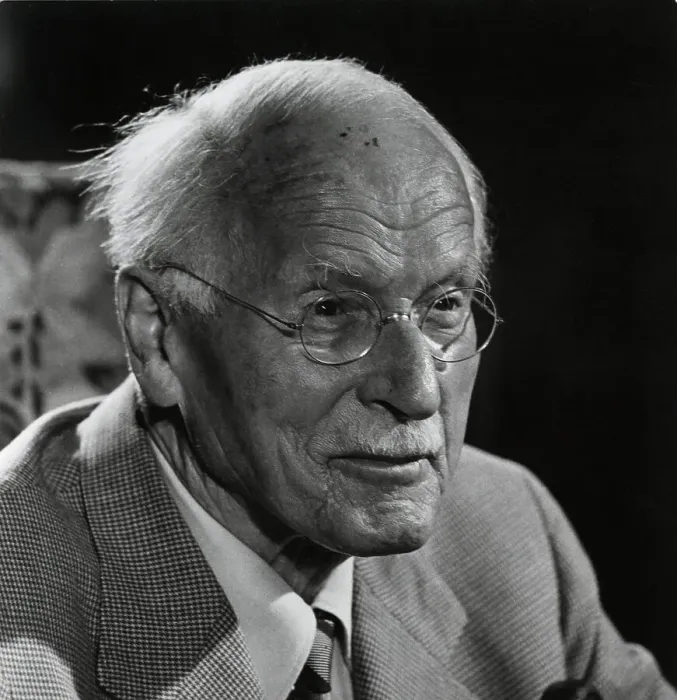 The psychological foundation for such work was laid by Carl Gustav Jung: projection is the unconscious process in which we perceive our own contents as outer ones, and active imagination a conscious conversation with images of the unconscious, which speak when they are offered a form. A card is exactly such a form: definite enough to set associations moving, and open enough for every woman to recognise her own story in it.
In On Divination and Synchronicity (1980), Marie-Louise von Franz explains why an oracle can be of use even to someone who does not believe in it as fortune-telling. For her every mantic practice, from casting coins over the I Ching to drawing a card, is a mirror of the unconscious. A chance outcome knows nothing of the future, but when the psyche is charged with a question, the unconscious fills it with its own content, so that in the image chosen by chance we recognise what we already carry within. The oracle thus does not determine what will happen, but shows the quality of the moment and returns to consciousness what the unconscious already knew. The true question to put to the cards, therefore, is not what will be, but what is alive now. The answer lies in the meeting between the image and the woman who looks at it.
Inspiration
In this guidebook I interpret the meanings of the terms drawing on the analytical psychology of Carl Gustav Jung: the collective unconscious, the archetypes, the shadow, the anima and animus, the Self and the lifelong process of individuation. Marie-Louise von Franz, his closest collaborator, considered fairy tales the purest expression of the collective unconscious, and her interpretations run through these pages.
 Joseph Campbell’s monomyth and the answers given to it by Maureen Murdock and Maria Tatar are presented on the following pages. Clarissa Pinkola Estés, a Jungian analyst and cantadora, a keeper of old stories, explored feminine archetypes in Women Who Run with the Wolves and called women back to their instinctual nature.
Before them all, the anthropologist Arnold van Gennep showed in The Rites of Passage (1909) that births, initiations, weddings and funerals around the world share a common pattern: separation from the old state, a perilous in-between state and incorporation into the new. Victor Turner later called that in-between state liminality. Many of the cards can be read as stations on such a passage.
Alongside them I draw on the Bible, on Gnostic texts, on the mystical traditions of East and West, and on the myths and fairy tales of many peoples, among which a special place belongs to the Serbian tales and songs collected by Vuk Karadžić and the Russian tales recorded by Alexander Afanasyev.
Campbell's Monomyth
In The Hero with a Thousand Faces (1949) Joseph Campbell describes the monomyth, a single story repeated in the myths of the world. The hero leaves the ordinary world, crosses a threshold, passes through trials and returns with a boon that renews the community. The three phases of this journey, departure, initiation and return, correspond to van Gennep’s phases of the rites of passage. The circle shows the twelve stages through which the screenwriter Christopher Vogler popularised Campbell’s model.
1. Ordinary World 2. Call to Adventure 3. Refusal of the Call 4. Meeting the Mentor 5. Crossing the First Threshold 6. Tests, Allies, Enemies 7. Approach 8. Ordeal 9. Reward 10. The Road Back 11. Resurrection 12. Return with the Elixir
The Heroine's Journey — Maureen Murdock
In 1981 the psychotherapist Maureen Murdock asked Campbell about the woman’s journey, and he replied that women do not need to make it, since they are already the place everyone is trying to reach. The lives of her clients told a different story. In The Heroine’s Journey (1990) a woman first separates from the feminine principle and identifies with the masculine world of achievement. Having won its rewards, she finds them empty and descends into the darkness of the goddess. The return leads through the healing of the bond with the mother and with the wounded masculine, to their integration.
1. Separation from the Feminine 2. Identification with the Masculine 3. Road of Trials 4. Illusory Boon of Success 5. Awakening to Spiritual Aridity 6. Descent to the Goddess 7. Yearning to Reconnect with the Feminine 8. Healing the Mother/Daughter Split 9. Healing the Wounded Masculine 10. Integration of Masculine and Feminine
The Heroine with 1,001 Faces
Maria Tatar, professor of folklore and mythology at Harvard, opens The Heroine with 1,001 Faces (2021) with an anecdote. When one of Campbell’s students asked him about the women in myth, he replied that woman is the mother of the hero, the goal of his achieving and his protectress. “I want to be the hero,” she answered.
Tatar observes that Campbell’s hero is a warrior seeking glory and immortality, while woman in his model is either prize or muse. As early as The Second Sex (1949) Simone de Beauvoir wrote that in songs and tales woman is Sleeping Beauty, Cinderella and Snow White, the one who receives and endures: locked in a tower or put to sleep, she is waiting.
Yet heroines did not merely wait. Deprived of sword and pen, they relied on words and the domestic crafts: Penelope weaves and unravels the shroud, Philomela weaves a crime into a tapestry, and Scheherazade halts the king’s violence with stories. Tatar therefore sets against the hero’s journey the heroine’s mission, driven by curiosity, care for others and the wish to right wrongs.
When women begin to write, Tatar says, the story changes.
Lights on My Path
My special thanks go to my mother Jasminka, my therapist Jelena, my former professors of dramaturgy and all the brave women around me, for their unwavering compassion and precious advice.
Your support has lit even the hard chapters of my life and given this project depth and meaning.
How to Read the Cards
Reading the cards of the Lineage of the Dragoness is a form of self-inquiry. The method draws on what Jung called amplification: a personal association with an image is widened by its mythological and cultural kin until the image begins to speak of the situation of the woman reading it. The card gives the image, the guidebook entry gives the mythological and psychological context, and meaning arises only when both meet personal experience. The terms of this deck mirror different aspects of ourselves, so every reading is also an encounter with oneself.
Before each reading it helps to set aside a few minutes of silence and to formulate the question clearly. The most fruitful questions begin with what and how rather than whether: not “Will this happen?” but “What am I not seeing in this situation?”. If impressions are written down, over time they become a journey journal, in which one can see which symbols and patterns keep returning. As our interpretations of the same card change, we observe and witness our own inner change.
1. One Card
A single card is the simplest reading and also the deepest, since nothing distracts from the encounter with the image. Draw a card for the day that is beginning, for a decision that awaits you or for a question you carry. Marie-Louise von Franz wrote that chance exists in an oracle so that the unconscious is given an opportunity to speak, and the symbol on the card acts as a catalyst: it sets in motion what in us is already ready to move. Before you read the entry, stay with the image:
1. What do you see first in the image?
2. How much time passed between turning the card and the first clear association?
3. Does the card unsettle you or move you?
4. Where does this image touch your life?
If the association came at once, that is usually a sign that the link between the term and your inner world, or one of your relationships, is exceptionally strong. If the card makes you uneasy, look for new associations or for reading on that term: understanding helps to name a feeling, and once it has a name, fear and unease grow smaller. Then read the entry and notice where your answers agree with it and where they part ways.
2. Two Cards
This practice is also called the method of comparison. When two cards lie side by side, a dialogue opens between them at the archetypal level. Constructivism starts from the assumption that we do not find meaning ready-made, but build it ourselves: in The Psychology of Personal Constructs (1955) the psychologist George Kelly showed that we understand experience through pairs of opposites, such as close and strange or safe and dangerous. The second card therefore does not merely add a new meaning, but changes the meaning of the first.
Draw two cards, lay them side by side and compare them, in the spirit of Jung’s thought on the tension of opposites:
1. What do these two cards have in common?
2. Are the terms opposed, synonymous, or do they complement each other?
3. Which of them do you accept more easily, and which do you resist?
Comparison also shows where we see one-sidedly and what we have repressed, for the card we resist often carries what we lack. Jung wrote that the tension between opposites is not a problem to be removed, but a source from which, if both sides are patiently held in consciousness, a third solution arises.
Over time, pairs and then sequences of cards form codes: images that keep returning together and become a personal language in which the unconscious speaks.
3. Three Cards: A Story in Three Acts
The cards can also serve as an aid in building a narrative, whether a fairy tale, an epic fantasy or a realistic story supported by the symbolism of the cards. This reading follows the classical dramatic structure in three acts. Draw the first card and let it begin the story, then let the associations awakened by each following card decide what happens next. Fictional characters can be given the archetypal functions of the figures on the cards, so that one becomes the Mentor, another the Trickster or the Guardian, or they can meet the symbols and motifs of the cards along the way: a key, a crossroads or a source.
1. Exposition: the first card introduces the hero and their world.
2. Complication: the second card brings conflict or a turn.
3. Resolution: the third card shows how the story is resolved or transformed.
The three-act story can be extended: each act can receive new cards, and laying out the whole deck yields a longer story, with minor characters, side currents and twists. This practice is close to narrative therapy, developed by Michael White and David Epston, which holds that the story we tell about ourselves shapes who we are. Writers and all who build fictional worlds can find in it a source of characters, plots and turns.
4. Five Cards: My Heroine's Journey
Before the reading, ask yourself one question and write it down. Then shuffle the deck and lay out five cards face down, as in the diagram. Turn them over one by one and read them as stages of your own heroine’s journey:
1. Call: What is my call to adventure?
2. Threshold: How does facing this term help me cross the threshold of the known?
3. Equipment: What must I integrate to be fully equipped for the road ahead?
4. Trials: What does this card tell me about the obstacles on my path, inner and outer?
5. Return: Does this term stand as a goal and the fulfilment of a wish, or does it lead me back to the beginning, like a circle that closes so that a new one can begin?
When all five cards are turned, tell yourself the story once more, from beginning to end, as a whole. Only then read the entries and return to the question you began with.
5. Sisterly Reading
Each of these readings can be done in pairs or in a circle of women. One draws a card and says what she sees in the image, and the other reads the entry aloud to her; then they change roles. It matters to listen without hurry and to leave room for the other’s card to be interpreted: every woman knows best what her image means in her life.
This way of reading continues the old practice of women’s gatherings. In the villages women met in winter at spinning bees, where they told stories, sang and passed on knowledge while they spun, and it is in such a circle that a story becomes medicine. Reading together, you become part of the lineage after which the deck is named.
Sisterly reading is also a way, in a safe and close setting, to open spiritual dilemmas, and to make and deepen friendships and acquaintances.
6. Collective Events and Activation within the Community
The cards can also mirror what is happening in the wider society: great changes, the achievements of a generation or its traumas. They do not predict such events, but they can offer tools for personal change. When an individual changes, so does what she projects onto the collective, and inner work becomes a contribution to the community as well. Draw a card for an event that touches your community and ask yourself:
1. How is this term mirrored in what is happening around me today?
2. How, by understanding and integrating this term, can I contribute to the wider community, through my story or my actions?
The Cards as a Tool
The cards are a good aid in therapeutic work, but they also serve self-reflection, play, getting to know one another and building stories.
Cards such as Death, Mother or Trauma do not announce what will happen, but speak of what is unfolding within us. We go with them only as deep as we can, and in therapy with the support of a professional.
The Grimoire continues
The Foreword and Introduction are open to everyone. To continue into the complete Symbolic Lexicon and the rest of the Grimoire, unlock membership.
Unlock to continue